Singapore HeritageFest 2016

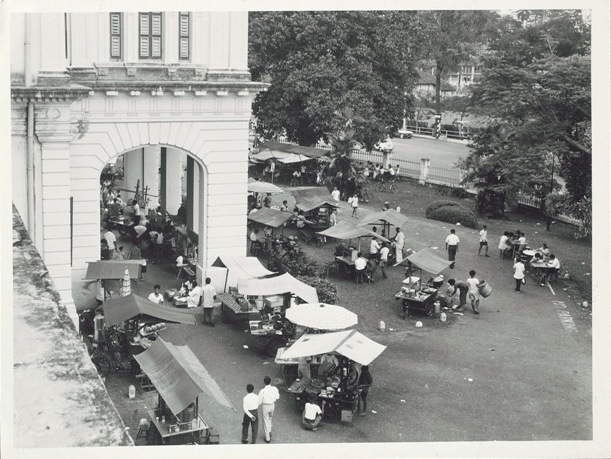
Hawkers on the National Museum grounds in the 1960s

Did you know that lots of hawkers lined the grounds of the National Museum decades ago and people would go there and eat? We didn’t! So it was a surprise to see this picture of the National Museum taken in the 1960s!

You’ll get a taste of this when the Singapore HeritageFest swings by again over three weekends from 29 April to 15 May. There’ll be 130 programmes and activities across the island which people can take part in to discover the richness of our history and heritage.
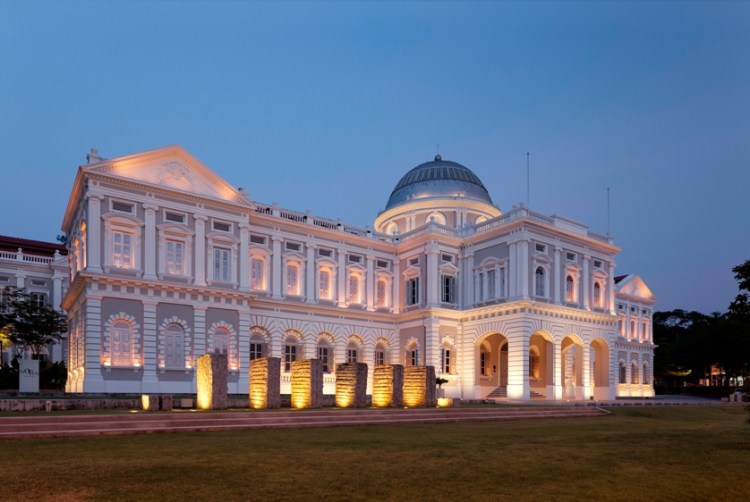
National Museum of Singapore - Image courtesy of National Museum of Singapore

To start with, on the opening weekend, the organisers will transform the museum grounds back to the old days that you see in the photograph. Fifteen 2nd and 3rd generation hawkers will set up stalls here to sell their local specialties like popiah and prata, while people can enjoy performances, outdoor film screenings, storytelling of ghost stories (Yikes!) and a special exhibition on 80 years of radio in Singapore. You can also get on board the Storytelling Van and hear tales about the iconic sites of Singapore, or get busy with some crafty and cooking workshops.
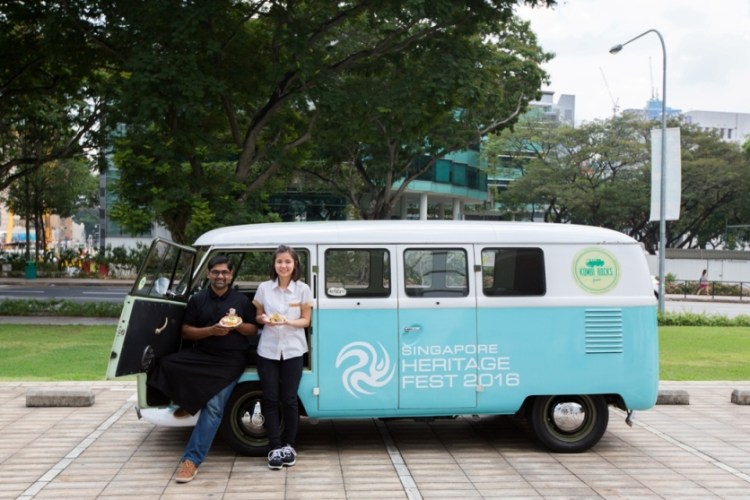
SV Gunalan and Chang Su Hui who continue to run their family business, will be among the hawkers at NMS on the opening weekend.

On the same weekend, Bukit Pasoh will also be closed off for a street party and outdoor performances while historic clan houses in the area open their doors for the first time. Wander in and have a guided tour and see what these mysterious clubs do. You’ll also catch more performances like lion dances and Chinese opera.
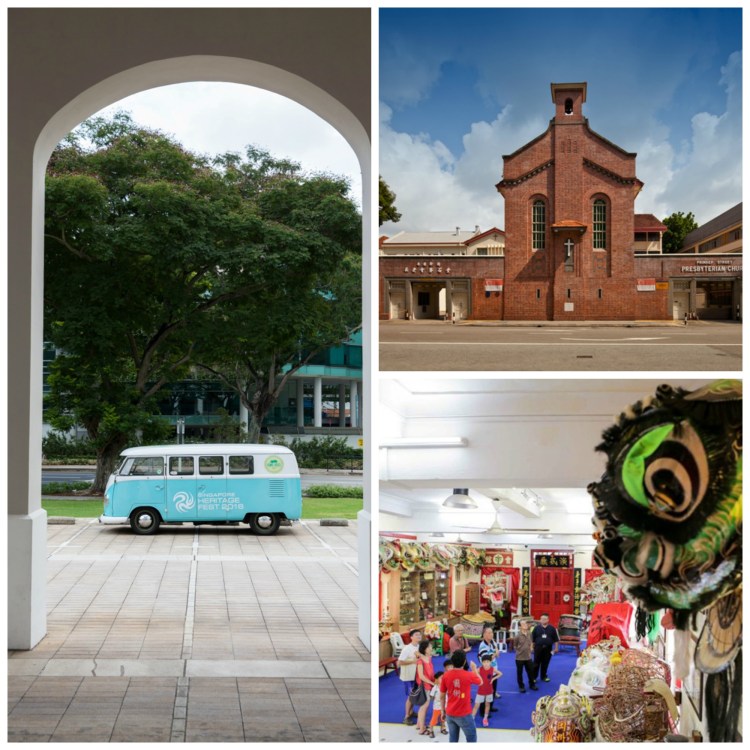
From right: The Storytelling Van, Prinsep Street Presbyterian Church, Kong Chow Wui Koon.

The second weekend (6-8 May) brings the festival to the heartlands. Among the many heritage and food trails being conducted that weekend is the new Bedok Heritage Trail via a guided bus tour, and an open house at the majestic Command House. If you’ve never been there, this is a gem of a chance. Then there’s A-Go-Go Night at Kampong Gelam, with a mini concert at the Malay Heritage Centre that pays tribute to the legacy of 1960s Singapore bands like The Siglap Five and The Quests. Drag your grandfather along and make sure he puts on his old dancing shoes. It would surely take him back to his younger days.

The third weekend (13-15 May) brings the Heritagefest to Pulau Ubin, with adventure walks, music performances by local musicians, and film screenings under the stars on this nature-filled island.
PicMonkey Collage heritage3
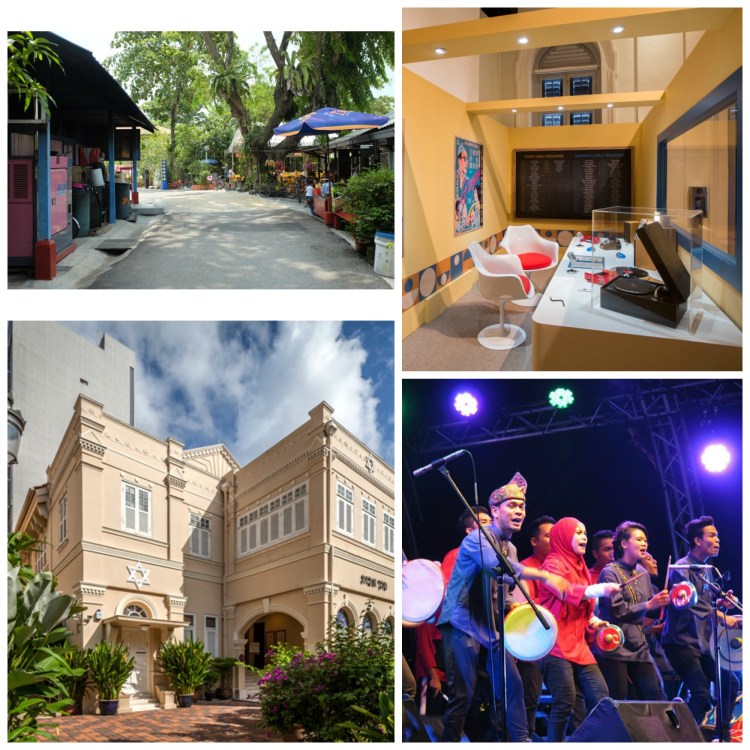
From top right: Pulau Ubin, retro radio studio at the 80 years of radio in Singapore exhibition at NMS, the Aliwal Arts Centre, and Maghain Aboth Synagogue

There are simply loads more programmes across the island, such as a week of activities by the Hokkien Huay Kuan Thian Hock Keng, with movies under the stars, stiltwalking and dragon dances, (26 Apr – 1 May) and the first ever Eurasian Heritage Bus Tour. There’s a heap of other cultural and historical tours that you can join in — guided walks to explore the heritage of Jurong, Dakota Crescent, Joo Chiat; Indian, Chinese and Malay heritage tours, even a tour of Tanglin Halt at 4am in the morning (see how the neighbourhood wakes up everyday!), and open houses at a host of buildings that you probably have never stepped foot in, from temples to mosques and even historic schools.

There’s just too much to list, so it’s best you get onto their website www.heritagefest.sg for more details. Some activities are ticketed or require registration which starts on 22 April at 2pm. Get your name down early as the popular events sell out in a snap.

 

Recipe for Kids: Cheese, Sausage & Pineapple Sticks

hedgehog
This retro cocktail centrepiece was very popular at parties in the 70s and 80s—and not just for the children! It’s super easy to put together. Try making it at home today!

Ingredients
10 cubes of cheese
10 mini cocktail sausages (cooked)
10 chunks of pineapple, canned
10 cocktail sticks

Method
1) Skewer one of each ingredient on a cocktail stick.
2) Repeat until all the ingredients are used up. Serve immediately.
3) If you like, make a cocktail hedgehog by sticking the other end of the cocktail stick into a halved grapefruit. Then use halved olives and a cherry to make its eyes and nose.

The Singapore Pineapple

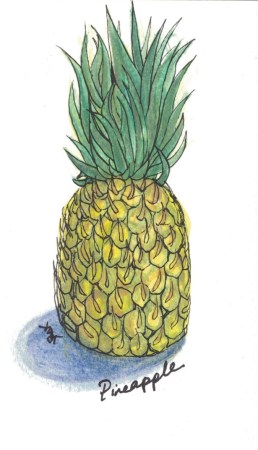
PineappleWe love pineapples—in pineapple tarts, in rojak, in pineapple upside down cake and especially, Thai pineapple fried rice, which some say is really a Singaporean creation! But the best way to enjoy them is on their own, when they are fully ripened and freshly sliced. Then they are sweet and tangy and very refreshing.
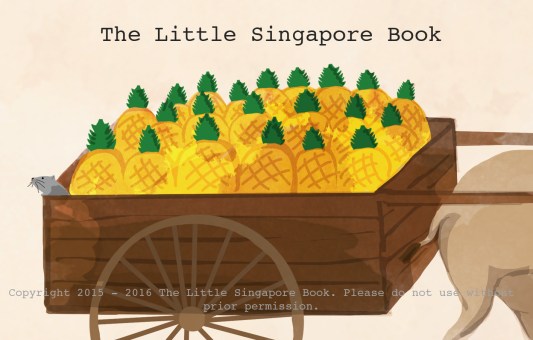
Most of the pineapples you see in the markets today come from the Philippines. Some are from Malaysia. But once upon a time, Singapore too grew lots and lots of pineapples. (Spot the cart of pineapples on page 15 of The Little Singapore Book.)

In the early 1900s, pineapple was often grown together with rubber on the same plantation. At that time, rubber was a very profitable crop. That meant that you can sell it for lots of money. But rubber trees grow very very slowly, and take at least five years to mature. The pineapple bush, on the other hand, grows quickly and you can harvest the fruit in just 18 months.

Rubber plantation owners in Singapore and Malaya would grow pineapples and sell them while waiting for their rubber trees to grow. Some of them, such as “Pineapple King” Lim Nee Soon, became very rich this way. (Did you know that Nee Soon Village, Nee Soon Road and Yishun were all named after him?)

pineappleSG2
During that time, there was even  the Singapore pineapple—what they called canned pineapples from the island. Canning helps to preserve the fresh fruit, and canned food was becoming very very popular then. So Singapore began canning its pineapples and those from the Malay Peninsular to ship and sell them to faraway countries like the UK. Until 1921, most of the canned pineapples from Malaya were produced in Singapore. In fact, pineapple canning became one of Singapore’s earliest manufacturing industries and provided many jobs for the people on the island.

By the late 1920s, however, prices for pineapple were falling and plantation owners in Singapore gradually turned to other crops. After the Second World War, very very few pineapple plantations were left on the island. Most had moved to Johor and the rest of the Peninsula.

Published
Categorized as Things

Founding Fathers in a Nutshell

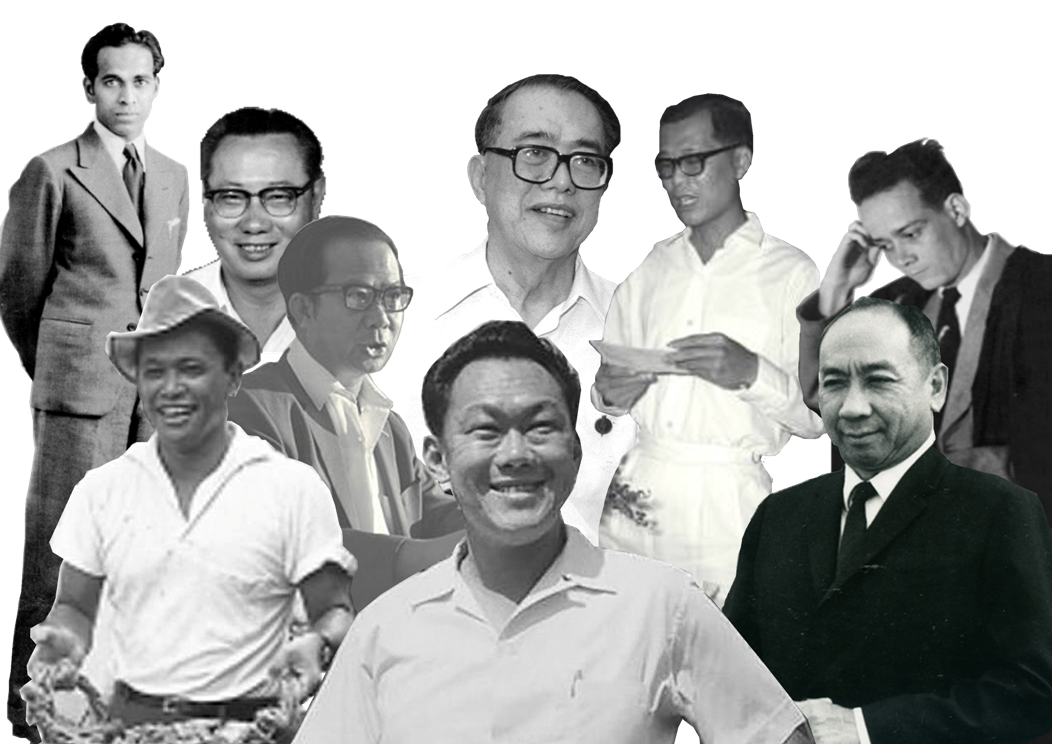
Mr Lee Kuan Yew is most well known as Singapore’s first Prime Minister and the man who lead the country to independence. He is also considered the Father of Modern Singapore, and served as  prime minister for over 30 years. But in the early days when Singapore was struggling to gain independence and then to stand on its own as a newly independent country, Mr Lee had a team of brave men to worked alongside him. They are considered the ‘founding fathers’ of Singapore.  Here’s a quick profile of them in a nutshell.

Singapore Founding Fathers LSB - Copy

Toh Chin Chye
As Deputy Prime Minister, he was most well known for being responsible for creating Singapore’s national symbols including the Singapore flag and the Coat of Arms. He later became the Minister for Science & Technology (1968-1975) then the Minister for Health (1975-1981) and retired in 1988. When he passed away in 2012, he was honoured with a state funeral.

Goh Keng Swee
Mr Goh is considered the economic architect of Singapore. As Minister of Finance, he invited many foreign companies to invest in Singapore to set up businesses here, which created jobs for Singaporeans and helped the country industrialise. Later as Minister of Defence, he set up the Singapore Armed Forces and made national service compulsory for all Singaporean men. After being Minister of Finance in the first cabinet, he became Minister for the Interior and Defence (1965-1967), then back to being Minister of Finance (1967-1970), Minister for Defence (1970-1979), Minister for Education (1979 -1984), and finally as a Deputy Prime Minister (1973-1984). He retired after that, and passed away in 2010. He was given a state funeral.

Sinnathamby Rajaratnam
Better known as S. Rajaratnam, he is best remembered as being Singapore’s first Minister of Foreign Affairs. When Singapore became independent, he had the job of getting the new country recognised all over the world. He put Singapore on the international stage by helping Singapore get into the United Nations, and helped establish ASEAN (Association of South East Asian Nations). He also steered Singapore through during the Vietnam War and the terrible period of Konfrantasi. Mr Rajaratnam wrote the Singapore Pledge which students continue to recite every morning all over the country. Mr Rajaratnam was Minister for Foreign Affairs in Singapore (1965-1980), Minister for Labour (1968 – 1971), Deputy Prime Minister (1980-1985) and Senior Minister (1985-1988). He retired in 1988 and passed away in 2006 and was given a state funeral.

Ong Pang Boon
In the early days, Singapore was not as orderly or safe as it is now. Organised crime, secret societies, gambling dens, prostitution and corruption was common. As minister for home affairs, Mr Ong, with the police, cleaned up the city, went after the secret societies and organised crime, closed down the vice dens and went after corruption, turning Singapore into the orderly, lawful state it is now. When he was Minister of Education (1963-1970), he made second language compulsory in schools, as he believed it was important to Singapore’s survival.  He later became Minister without Portfolio (1970-1971), Minister for Labour (1971-1981), Minister for Communications (1983), and Minister for Environment (1981-1984). He retired from politics in 1988.

Othman Wok
As Minister for Social Affairs (1963-1965, 1968-1977), he had to look after the issues of the poor and disadvantaged. He set up the Singapore Council of Social Service (now National Council of Social Service) and later the Volunteer Social Service Bureau. He did a lot for the Malay community too, setting up the Mosque Building Fund (MBF), where Muslims contribute a small sum from their monthly salary to build mosques in new towns. He also helped set up MUIS which handles Muslim affairs. From 1977 – 1981, he was Minister without Portfolio and Ambassador to Indonesia. He retired in 1981. Many people may not know that he wrote and published a few horror story books after he retired, including Malayan Horror: Macabre Tales from Singapore and Malaya in 2004.

Lim Kim San
Mr Lim was Singapore’s first Minister of Finance, and he over the years, he was also Minister of Defence, Environment, Communications, and  National Development. But he is most well known as ‘Mr HDB’. In Singapore’s early days, most people were living in terrible conditions – in slums and squatters without electricity or running water. So when the government set up the Housing Development Board (HDB), he volunteered to run the HDB without pay for the first few years. During that time, the HDB built so many flats for Singaporeans, it averaged one every 45 minutes. He also made it such that Singaporeans could afford to buy their own homes. He retired from politics in 1980 and died in 2006.

EW Barker
Mr Barker drafted the papers for Separation from Malaysia, and was the first to put his signature to them. He was also Singapore’s longest serving Law Minister from 1964 to 1988. Since Singapore’s independence, he helped develop Singapore by overseeing the housing, and was a driving force behind the building the first National Stadium in Kallang. He also set up the Preservation of Monuments Act, that allowed historical buildings to be preserved. He retired in 1988 and passed away in 2001.

Hon Sui Sen
Mr Hon served Singapore for 44 years of life, first in the civil service then as a minister. As a minister of finance in the early years, he helped Singapore industrialise and grow its economy. Under him, lots of factories sprang up in Jurong, creating jobs for lots of people. He was also instrumental in turning Pulau Blakang Mati, a fortified island used by the British army, into Sentosa, an island for tourists and Singaporeans to enjoy themselves. He was Finance Minister from 1970 until he died in 1983, making him one of the longest serving Finance Ministers in the world.

(Source: Singapore Infopedia NLB. PIcture credits: Straits Times)

An Infestation of Rats and Centipedes

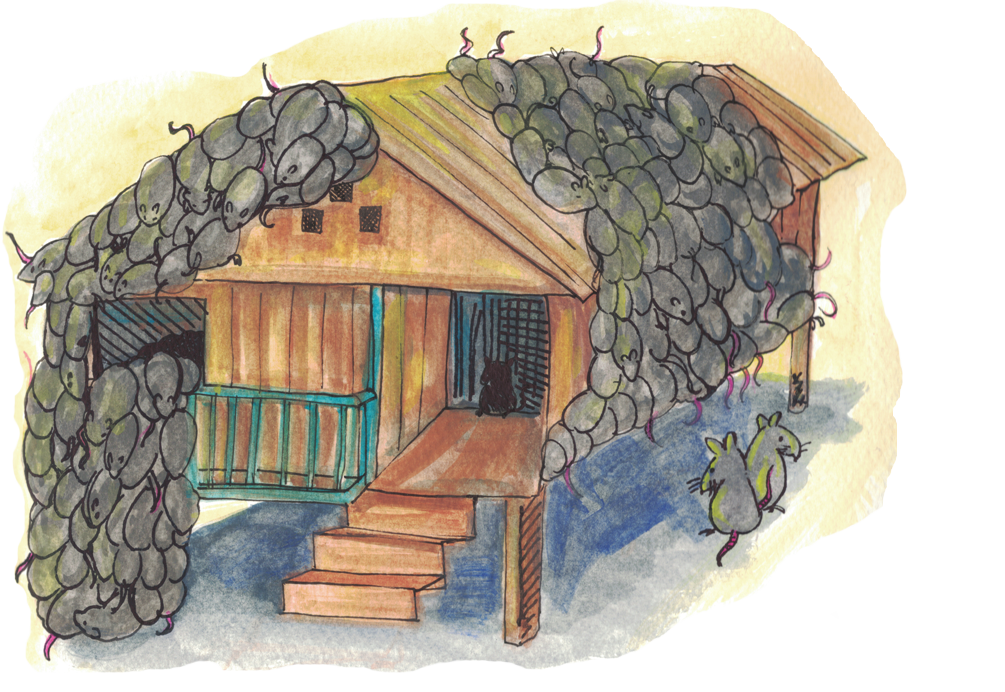
Do you see lots of rats in the scene of early Singapore on page 14? Why do you think the artist drew so many rats? There is good reason for that. Read on and find out.

Early Singapore was a colourful place, with merchants and pirates, coolies and colonials. But it was also full of animals. Sometimes there were so many of them, there would be a plague and the people had to deal with them as best as they could. Munshi Abdullah, the famous scribe and linguist of 19th century Singapore wrote about such an occasion.

Rat infestation by Pipi - Copy - Etched - Correct


In the 1820s while William Farquhar was still governing Singapore, there came a great infestation of rats. Do you see them picking at food and crumbs on Pg 14 of The Little Singapore Book? There were so many rats they overran warehouses and homes, chewed through the wood, stole food and ransacked the godowns. Even Munshi Abdullah’s pet cat was attacked by a pack of large rats one night. So big were they that their hefty weight could knock a person down if he wasn’t careful out walking at night.

They were a real nuisance and people began to complain.

But without rat catchers and pest busters then, what could Farquhar do? First, he asked everyone to try to catch the rats. But all they did was complain and hope their neighbours would do the deed.

Seeing that the rat problem was still there, Farquhar then offered to pay one ‘wang’, or coin, for every rat caught and killed. With this reward, everyone sprang into action and started catching rats with every ingenious idea they could think of. For about a week, thousands of dead rats were brought in every morning, and Farquhar was kept busy paying the people a wang for each dead rat.

But the numbers never fell. There were as many dead rats brought in every morning. Could people be bringing the same carcasses in day after day?

So Farquhar ordered a large trench to be dug and all the dead rats were buried. This seemed to do the trick. From that day, fewer and fewer rats were caught every day and soon, the plague of rats was over.

But it was peaceful for only a short while.

Soon after, people in Singapore became bothered by centipedes. Have you been bitten by one before? It can be very painful.

That’s what happened to lots of people when they were walking along Singapore River, or even when they were at home. The Munshi complained that all he had to do was sit at home for a while, and a few fat centipedes would drop from the ceiling onto his lap and promptly give him a few good bites.

When Farquhar heard about this problem, he again offered a reward of a ‘wang’ for every centipede caught. This plan worked again as people once again devised ways to catch the offending creatures and made every effort to hunt them down. Hundreds of centipedes would be brought in every morning. This time, they were promptly buried. After a few days, the numbers dwindled until finally, the Munshi wrote: “The lipan (centipede) war was also ended and people ceased to mourn from the pain of their stings.”

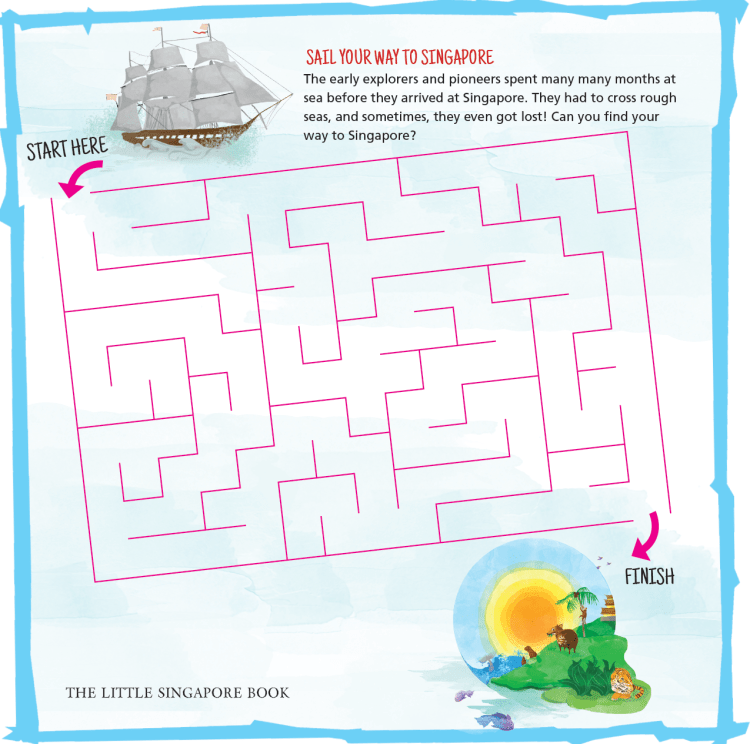
Sail Your Way to Singapore

A long long time ago, before air travel became popular and affordable, and before the Causeway and Second Link were built, the only way to reach Singapore was by sea. Many of Singapore’s early immigrants travelled on ships and braved rough seas, bad weather and cramped uncomfortable conditions to get to the island.

It took some of them a very long time to reach Singapore, up to several months. You can bet they were pleased when they finally reached the island!

A Note to Grown-Ups: Here’s an easy activity inspired by our forefathers’ perilous sea journeys. It is perfect for younger children aged five to eight. Click on this link activity book.maze to download the maze below, select ‘fit to page’ on your printer, and print it out for the little ones to sail their way to Singapore!

Screen Shot 2016-01-28 at 9.41.48 PM


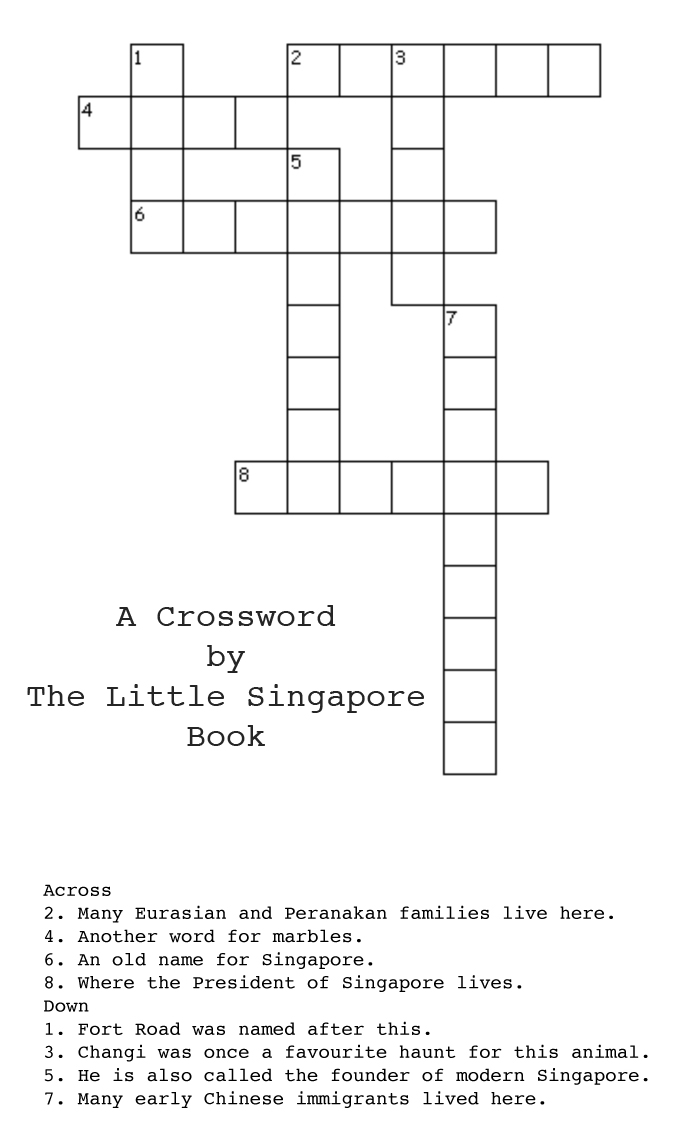
Crossword for Kids

Do you know which animal made Changi its favourite haunt? What is another local name for marbles? Find out how well you know Singapore and its rich history with this quick crossword puzzle, the first in our series of crossword puzzles on Singapore.

A Note to Grown-Ups: Download from the link below, select ‘fit to page’ under printing options, print out and challenge the kids to give it their best shot. Enjoy!

Hint: You’ll find all the answers in The Little Singapore Book (and in the pdf link below). Click on this link to download PuzzleJan2016


Criss Cross Puzzle

William Farquhar — The Other Founder of Singapore

Everyone knows Stamford Raffles as the Founder of Singapore. But in all his life, he only spent 8 months at the longest stretch on our little island. Raffles may have had the grand plans, but it was William Farquhar who stayed on and ruled in Singapore. He worked with the people here and took Singapore from the sleepy fishing village it was to the commercial hub of his time, almost 200 years ago.

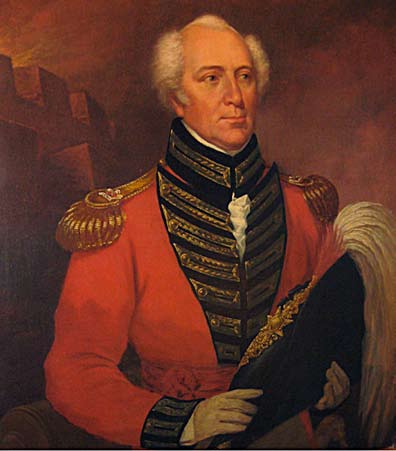
William Farquhar, The First Resident and Commandant of Singapore

Born in Scotland, he joined the East India Company as a young man, and spent many, many years in the East. He could speak fluent Malay, and knew the local customs well. He was friendly to everyone – the foreigners and locals alike, and was very well liked. Farquhar was married a lady called Antoinette Clement, the daughter of a French officer and Malay woman. Farquhar and Antoinette had six children together. He was known in his later years in Singapore to have worn a sarong at home instead of western clothes.

By the time he landed in Singapore with Raffles on 28 January 1819, Farquhar had already spent 15 years as the Resident and Commandant of Malacca and was, as you can guess, very familiar with people and culture here. It was he who who discussed the agreement in Malay with the rulers of Singapore to set up a trading post here. (You can see him signing the agreement on page 13 of The Little Singapore Book.) Soon after, Raffles left Singapore while Farquhar stayed on as the First British Resident and Commandant of Singapore. He had the tough job of building up and developing the little island.

It wasn’t easy.

Raffles had declared Singapore a free port, which meant Farquhar could not collect taxes from the merchant ships  which came to Singapore to buy and sell goods. Even though the great ships from all over the world sailed in to trade, all that business couldn’t provide Farquhar with money carry out Raffles’ grand plans to turn Singapore into a modern city with all the facilities needed like roads and buildings, drains and canals.

He asked the senior officers (ie. his bosses) in Calcutta, India, for help, but they didn’t want to send money for Singapore. It was so far away and as yet unimportant. Raffles himself was little help as he was in Bencoolen and the postal service was slow and unreliable.

What was Farquhar to do? He needed to get things done. He was given his orders, but he wasn’t given  any money or means to earn it, to carry get the job done. He had no choice but to dig into his own pockets to pay for some of the expenses in building up Singapore. In such a difficult situation, he allowed certain not-so-pleasant activities to take place in Singapore, so that he could raise money for the island. Even though Raffles had said from the start they were not to be allowed, Farquhar let people run gambling dens, cockfighting, sell opium, arrack and even slaves! He could tax all these which gave him the money to build the much-needed roads and public works for the island.

Under his rule, High Street, the first road in Singapore, was built. Thick jungles were transformed into profitable gambier, coconut, and nutmeg plantations. As more and more people arrived to live and work here, there soon emerged residential areas with timber houses and wide verandahs, godowns by the Singapore River and many thriving businesses.

By 1820, Singapore had become one the most important trading ports in Southeast Asia!

Singapore’s Bumboats

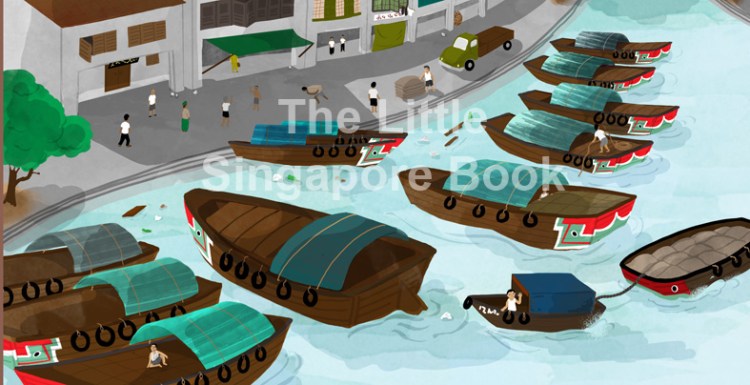
BumboatsWMOnce upon a time, the Singapore River was crowded with bumboats. They carried goods such as nutmeg and pepper between the ships moored out at sea and the warehouses, which were also called godowns.
Back in the day, bumboats came in all colours, shapes and sizes. Some were powered by motors, some depended on oars. Others were guided by long poles as they crawled slowly along. Most of them had big rubber tires strapped to their sides, in case they bumped into each other in the busy river. And all of them had “faces” painted on their bow, so that they could “spot” danger.

But lots of traffic meant that the Singapore River got really really dirty. After Singapore became independent, there was a massive national campaign to clean it up and bumboats were eventually banned from it.

These days, you can spot a few bumboats trawling the river. These are river taxis and they now carry only people, not goods.


Childhood Favourites – White Rabbit Candy

You can buy lots of sweets and candies in the shops these days. And there are huge shops selling nothing but candy too. But can you imagine that not that long ago, such a sight was not to be seen in Singapore?

Many of the sweets we take for granted now — like the different kinds of fruit gummies, multicoloured lollipops, the whole plethora of candy beans, popping candy, gobstoppers and chocolate candy — were either not available or really hard to find! Back in the 1960s and 70s, children had only a small variety of sweets to enjoy, most of them made in China. And if you were lucky or very good, you may have been treated to a special box of Dolly Mixtures or stretchy black Liquorice, imported all the way from Britain. (These seemed like they came straight out of an Enid Blyton storybook, which kids of the 70s devoured with a passion.)

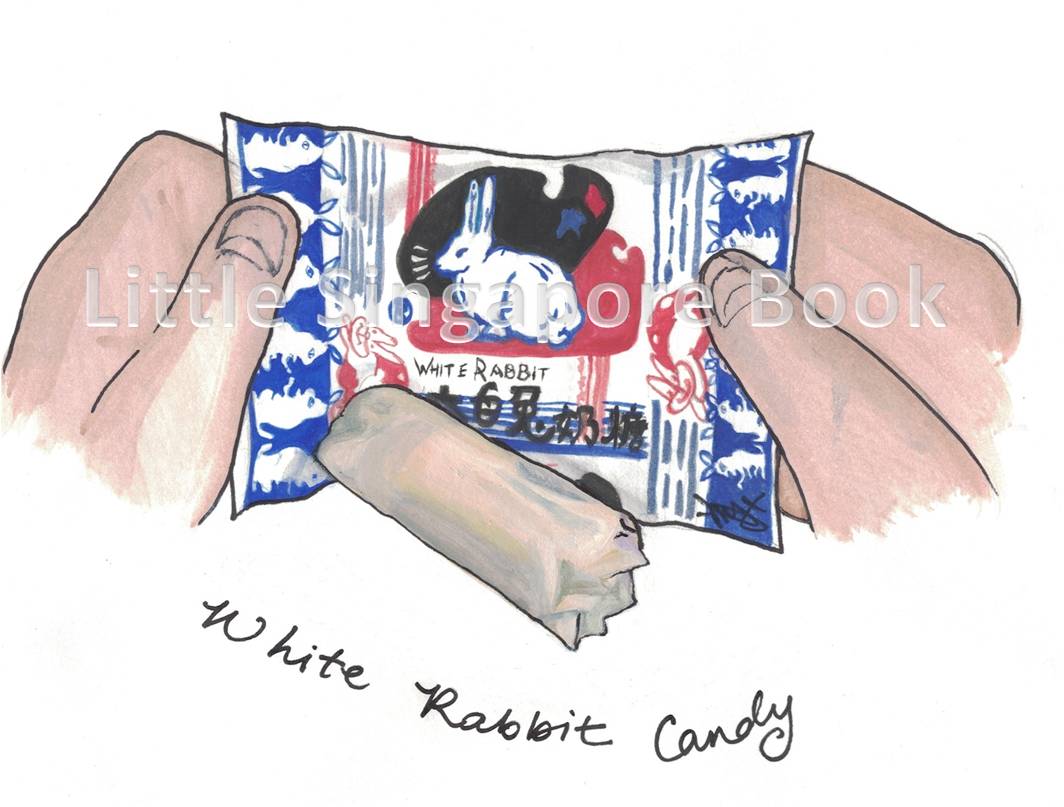
These days, you can still find lots of the traditional Made-in-China candy in some supermarkets like Sheng Siong. They are not as popular now, but one still remains a favourite. That’s the White Rabbit candy!

Illustrated by Sim Mei-Ann

Do you anything about it? It’s a big favourite during Chinese New Year, with its red, blue and black markings and trademark rabbit drawn on the wrapper. Kids loved to unwrap the sweet and bite off bits of the paper wrapping inside. It’s actually not paper, but a paper-thin layer made of glutinous rice flour. The sweet itself is a sweet, milky, chewy candy that everyone loves.

It was first made over 70 years ago at the ABC Candy Factory in Shanghai in 1943. Someone working there had tasted a milk candy from the United States and liked it. So he took the idea back to the factory, developed a recipe and in half a year, came up with the milk candies.

Note to the grown-ups : A few years ago, the White Rabbit Sweets were affected during the melamine milk food scare in China. Singapore pulled the sweets off the shelves when it was found to have traces of melamine. Since then, the sweets are made using milk from New Zealand, as White Rabbit has for quite some time been back on the supermarket shelves here.

Published
Categorized as Things